
Getting to Know: Chris Foss
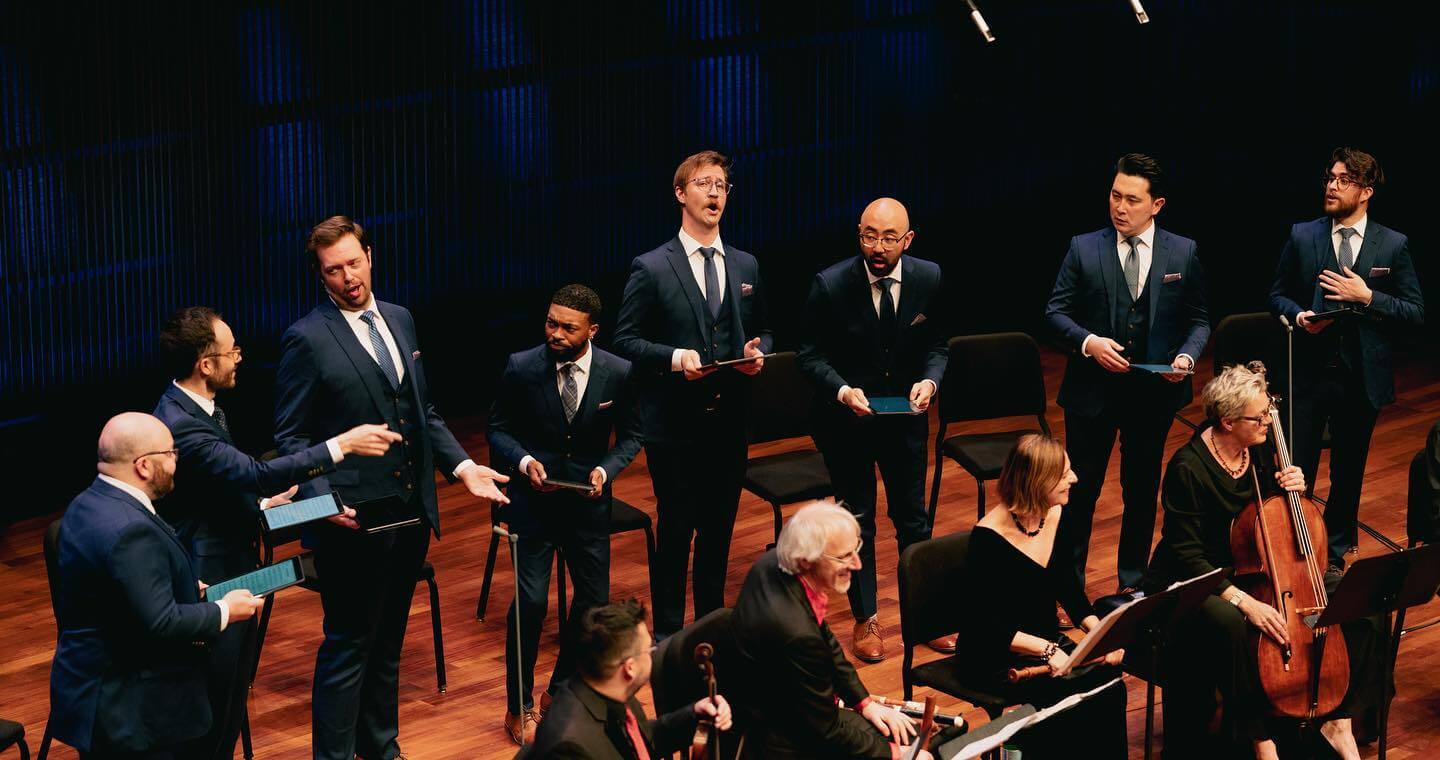
Bass Chris Foss joined Cantus in the fall of 2008, making this season Chris’ 15th season. We are so grateful for all that he has contributed to the ensemble during his time. We sat down with Chris to learn a bit more about this journey.

Chris Foss, bass
MEMBER SINCE: 2008
HOMETOWN: Council Bluffs, IA
EDUCATION: M.M. Choral Conducting, University of Nebraska; B.A. Commercial Music, Millikin University
EMAIL: CFOSS@CANTUSSINGS.ORG
Q: As the longest-serving member of the ensemble, what has changed over your tenure with the ensemble and what remains the same?
A: Cantus is a collaborative, non-hierarchical ensemble, so when we get a new member, there’s always not just a new sound to get used to, but a new set of musical and artistic tastes as well. For me personally, it’s always a joy to be exposed to new ways of thinking about music… and it always is refreshing! Conversely, there’s always a collective spirit amongst the artist that remains the same. It’s hard to describe, but it always centers around our commitment to cooperation, audience focus, and camaraderie.
Q: When beginning your musical journey, did you expect to end up in a cappella chamber music? How has that shaped your musical tastes and outlook?
A: I definitely had no idea where I’d end up when I began becoming more interested in music, especially because I’ve always been interested and passionate about such a wide variety of different types of music. But I think the thing I appreciate most is the collaborative environment in Cantus, which really sets it apart from other entities in the artist realm.
Q: What have you learned from being part of a constantly-collaborative ensemble that operates through the chamber music process?
A: In rehearsal, we often remark that, while it’s useful to identify problems and areas for improvement, it’s better to provide possible solutions as well. And beyond that, it’s better still to consider how the solutions will be received and implemented, especially by close friends and colleagues that you work with everyday. I know it might seem elementary for most, but we’ve found it’s a helpful guidepost for helping each other in a constructive manner.
Q: What skills has being a full-time artist allowed you to develop?
A: I’m not sure that I’ve developed specific skills because of this, but unfortunately, I’ve been deprived of the opportunity to develop skills in as a barista or server.
Q: Why does that full-time artist status matter?
A: It does allow us the advantage to really live with and get to know the music we perform very intimately. We always have the opportunity to dig in and notice details that wouldn’t be apparent if you don’t have a lot of rehearsal time, and are mostly focused on performing the correct notes and rhythms. So instead, we have the time to put our own personal artistic vision into the performance, as well as the extra rehearsal time to experiment with different interpretations.
Q: What is your dream project for Cantus?
A: Well, since you asked… I’d love us all to keep dream journals for a year, and use the most vivid dreams we have as the texts for a series of compositions to be written or arranged for us to sing. That’s my Cantus “dream project”. Alternatively, I think we’d really benefit from an in-depth residency in Hawaii during the months of January and February. Purely for scholarly research reasons, I assure you.